
Carol Du
Consultant, Beauty & Wellbeing
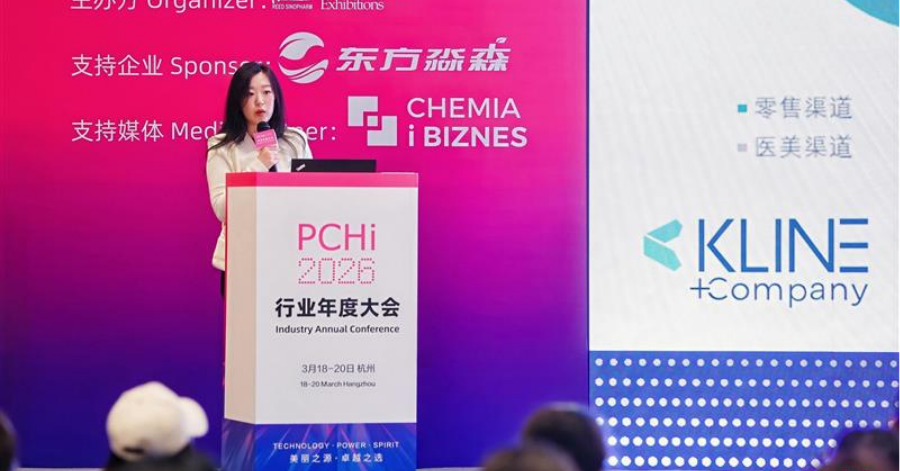
Our team has recently attended PCHi 2026, where Carol Dongze Du, Consultant in Kline + Company’s Beauty and Wellbeing vertical, presented on the global rise of light medical aesthetic skin care in China. Drawing on Kline’s professional skin care market analysis, the session compared market dynamics across China, the United States, and Europe, highlighting why China’s trajectory is distinct from other major markets. Below, Du shares key takeaways from her presentation, “Key Trends Shaping China’s Market”.
China’s light medical aesthetic skin care market is defined by several converging trends:
- Cross-channel integration is becoming the new standard, with brands strategically positioning themselves across retail, medical aesthetics, and beauty salons to create a seamless consumer journey.
- The line between cosmetics and devices is blurring through cosmeceutical device synergy, where skin care products are co-developed with beauty devices for enhanced efficacy.
- Format and ingredient innovation is accelerating, from freeze-dried technologies and unit-dose packaging to topical alternatives to injectables and at-home microneedling, reflecting demand for science-backed, accessible results.
Why China’s Path Is Different
China’s trajectory diverges from western markets in how consumers enter and move through the category. In the United States, adoption is increasingly direct-to-consumer, with professional-grade products migrating into at-home routines. In Europe, growth remains anchored in spa-led experiences.
In China, however, a hybrid model is emerging. Consumers are introduced to light medical aesthetic concepts in professional settings such as medical institutions and beauty salons, where trust is established through experience. However, purchases are often completed in retail channels. This pattern is driven by a highly informed, ingredient-conscious consumer base, regulatory shifts that favor local adaptation, and a competitive landscape where professional credibility and retail accessibility must coexist.
Impact and Outlook
Looking ahead, the professional channels, including medical aesthetics and beauty salons, will increasingly serve as experience and education hubs, while retail captures the majority of transactions. For brands, success will depend on reimagining the consumer journey:
- Establishing trust in professional settings
- Designing seamless pathways to retail conversion
- Investing in innovations that bridge efficacy with everyday usability
To explore how these dynamics compare globally and what they mean for your brand strategy, connect with a beauty industry advisor.