

Laura Mahecha
Director of Agrochemicals, Chemicals and Materials

Carlos Galan
Project Lead, Chemicals and Materials
Sustainability Is Reshaping Laundry Care
Laundry products are evolving rapidly as sustainability becomes a key driver of innovation across both household and professional cleaning markets. End users are increasingly seeking products that combine cleaning performance with reduced environmental impact, lower energy consumption, and improved convenience. These demands are influencing everything from ingredient selection and formulation strategies to packaging formats and operational practices.
In household laundry, consumers are looking for products that are effective, convenient, gentle on fabrics, and easy to understand. Professional laundry operators, meanwhile, are prioritizing solutions that reduce water use, energy consumption, logistics requirements, and operating costs without sacrificing performance.
Today, sustainability in laundry extends well beyond ingredient sourcing. It encompasses the entire laundry system, including surfactants, enzymes, fragrances, packaging, transportation efficiency, water usage, washing temperatures, and overall operational performance.
Sustainability Goes Beyond Greener Ingredients
Sustainability is increasingly shifting from a marketing message to a functional requirement. Users expect products that minimize environmental impact while still delivering strong cleaning results, fabric care, convenience, and value.
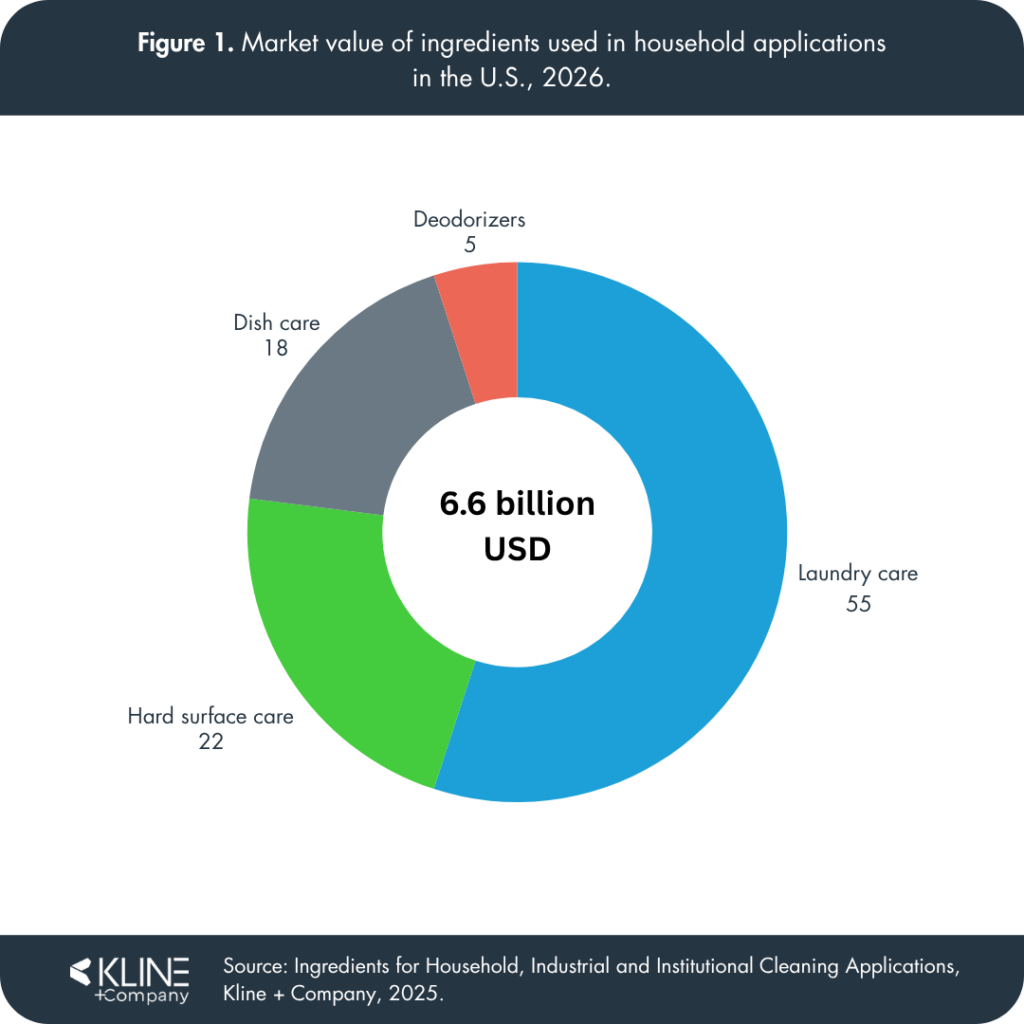
This evolution is changing how manufacturers develop laundry products. Instead of simply replacing one ingredient with another, formulators are taking a broader approach that considers formulation performance, packaging reduction, energy efficiency, and water conservation simultaneously.
The critical question for manufacturers and suppliers is no longer whether sustainability matters, but where it is creating measurable changes in formulation strategy, ingredient demand, and consumer behavior.
The Shift from Cleaning to Cleaning, Care, and Efficiency
Performance expectations are evolving. While cleaning efficacy remains essential, consumers and commercial operators increasingly consider factors such as fabric care, garment longevity, freshness, skin sensitivity, and environmental impact when evaluating products.
This trend is particularly evident in household laundry, where liquid detergents, unit-dose formats, laundry boosters, and fabric softeners continue to outperform more traditional powder detergents. Convenience, compatibility with modern laundry equipment, and formulation flexibility are driving these preferences.
In professional laundry settings, sustainability is often driven by operational considerations. Solutions that support cold-water washing, reduce packaging, simplify dosing, and improve efficiency can deliver both environmental and economic benefits.
Cold-Water Washing Is Elevating the Role of Enzymes
One of the most significant sustainability trends in laundry is the move toward cold-water washing. Since water heating accounts for a substantial portion of energy consumption during the wash cycle, reducing temperatures can significantly lower environmental impact.
However, colder temperatures require detergents that can maintain cleaning performance under different conditions. As a result, enzymes are becoming increasingly important in both household and professional laundry products. By breaking down proteins, fats, and starches, enzymes enable effective cleaning while supporting energy savings and reducing reliance on harsher chemistry.
Concentration Is Becoming a Sustainability Strategy
Concentrated detergents have become a major focus of sustainability initiatives. By reducing water content, these products require less packaging, lower transportation volumes, reduced storage space, and fewer raw materials overall.
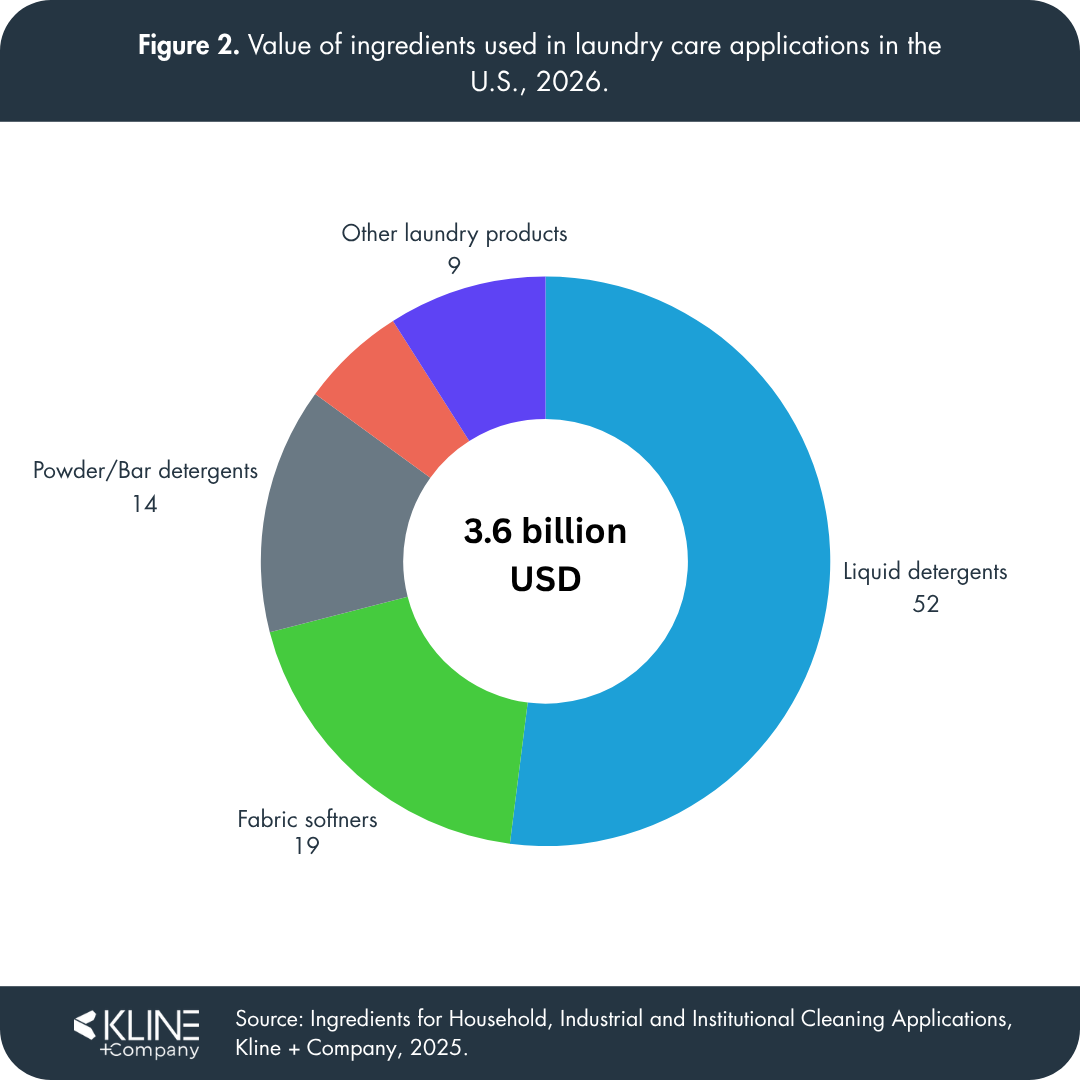
In professional laundry operations, concentrated products can also improve logistics efficiency and reduce operating costs. However, higher active ingredient levels create formulation challenges that increase the importance of high-performance ingredients capable of delivering superior results at lower use rates.
Waterless Formats Are Transforming Product Design
Waterless laundry solutions such as detergent sheets and other low-water formats are gaining traction because they bring multiple sustainability benefits together. These formats reduce plastic use, transportation weight, storage requirements, and water consumption while providing convenient dosing.
The trend is expanding beyond household laundry. Research among commercial and institutional laundry users also indicates growing interest in eco-friendly and waterless solutions, demonstrating that sustainability innovations are increasingly relevant across both consumer and professional markets.
Examples such as detergent sheets illustrate how sustainability, convenience, and performance are converging. However, long-term adoption remains dependent on cleaning effectiveness, particularly in commercial environments where products must perform consistently under demanding conditions.
Professional Laundry Adopts Sustainability Through Operational Efficiency
Commercial and institutional laundry operators are embracing sustainability, but their priorities differ from those of consumers. Professional users evaluate products based on operational outcomes, including cleaning performance, textile protection, water and energy savings, equipment compatibility, and total cost of ownership.
Research shows increasing demand for eco-friendly, phosphate-free, and biodegradable detergents, along with growing adoption of water-recycling technologies and energy-efficient equipment. This highlights the broader definition of sustainability in professional laundry, which extends beyond chemistry to encompass entire operational systems.
For suppliers, the implication is clear: sustainability claims alone are insufficient. Solutions that deliver environmental benefits alongside operational efficiencies will be best positioned for long-term success.
Sustainability and Functionality Are Shaping Ingredient Choices
Ingredient innovation continues to play a central role in laundry sustainability. While interest in bio-based and biodegradable ingredients continues to grow, successful formulations must still meet stringent performance, cost, and availability requirements.
As a result, many formulators are balancing renewable alternatives with established ingredients, creating solutions that deliver sustainability benefits without sacrificing cleaning performance or commercial viability.
Looking Ahead
The future of laundry sustainability will be defined by solutions that connect environmental responsibility with measurable value. In household laundry, this means products that are effective, convenient, and easy to use. In professional laundry, it means solutions that reduce water, energy, logistics, and operating costs while maintaining cleaning performance.
The shift is already underway. Cold-water washing, enzyme technologies, concentrated formulations, waterless formats, and packaging reduction are changing how companies innovate and compete across the laundry value chain. Organizations that view sustainability as a system-wide opportunity rather than a standalone claim will be best positioned for future growth.