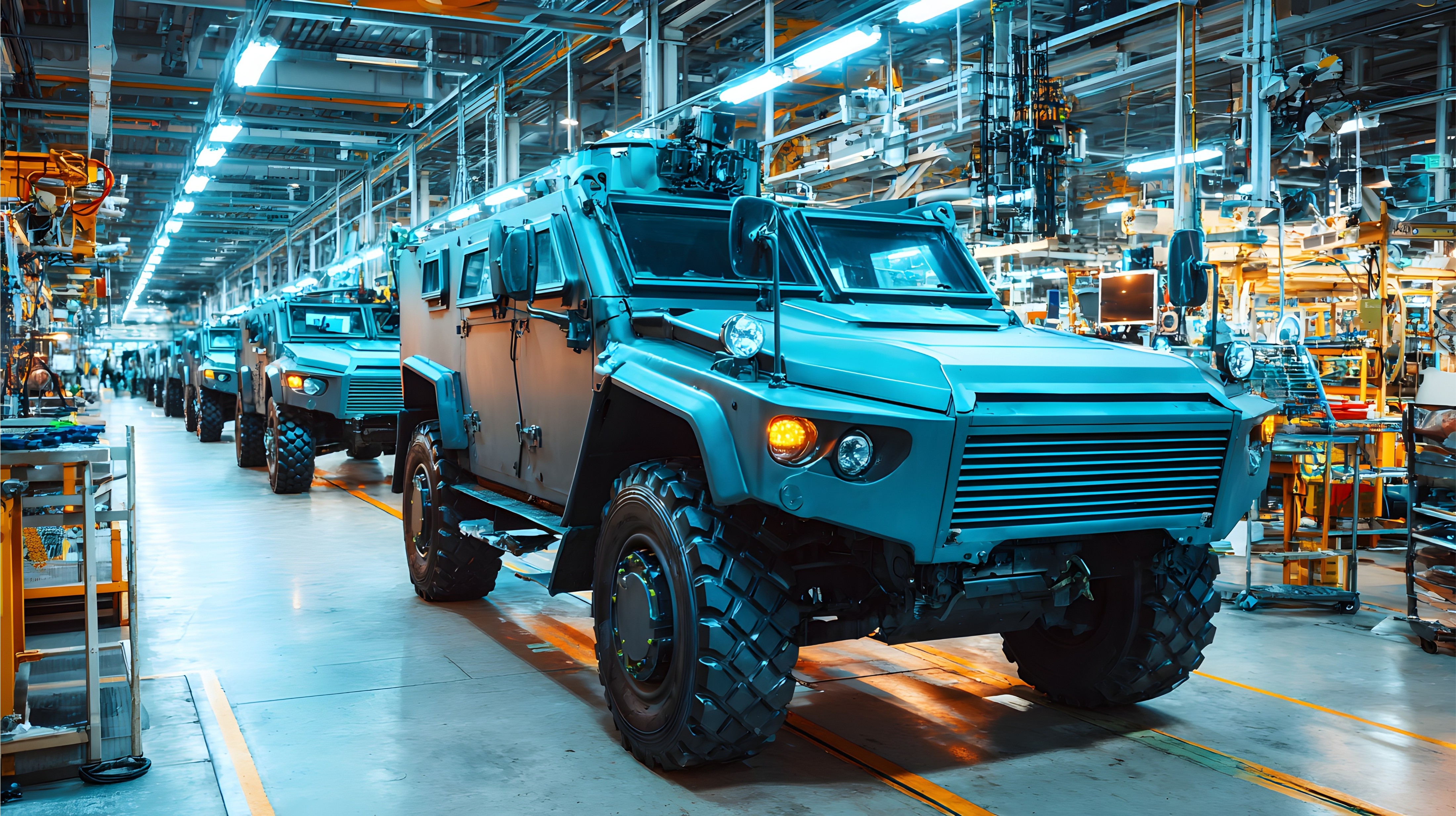

Europe’s defense expansion is moving from government budgets and order books to factory floors.
Global military spending reached a record USD 2.9 trillion in 2025, while spending in Europe rose 14%, according to the Stockholm International Peace Research Institute. The result is an industrial buildout that is adding production lines, converting existing plants, and redirecting automotive manufacturing capacity toward defense equipment.
In turn, this is feeding into a reoriented supply chain that is consuming increasing amounts of metalworking fluids, greases, and general industrial oils used in machining operations.
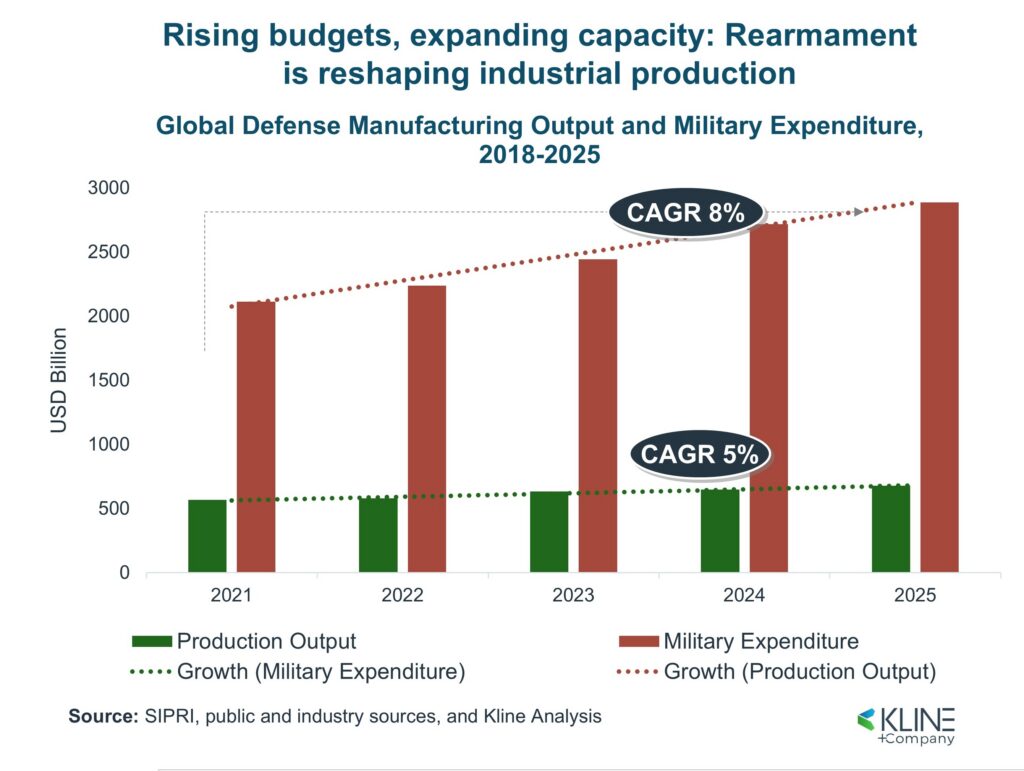
European supply chains are pivoting from automotive to defense
European governments are on a spending spree. NATO allies have pledged to increase annual defense and defense-related investment to 5% of GDP by 2035, with at least 3.5% for core defense requirements and up to 1.5% for broader priorities such as infrastructure, resilience, and, crucially, the defense industrial base. These commitments are filling manufacturers’ order books, but they are also stretching existing production capacity and placing additional strain on supply chains.
This demand is offering a lifeline to parts of Europe’s crisis-ridden automotive supply chain, particularly in countries that are key automotive hubs, such as Germany. The sector has suffered in recent years from high energy costs, slowing demand, trade tensions, and intensifying competition from Chinese automakers. Defense manufacturers need factories, skilled workers, and serial-production expertise; automotive companies have underused plants and transferable capabilities. As a result, automotive manufacturing facilities, workers, and production systems are being repurposed across the continent.
Rheinmetall is converting its Berlin automotive-components plant to manufacture casings for 155 mm artillery shells. Renault in France at a capacity of 1,000 units per month from 2027. In Finland, Patria and Valmet Automotive are expanding production of Patria 6×6 armored vehicles, transferring automotive serial-production expertise into defense manufacturing.
This is a trend observable across the continent, but it is not a like-for-like substitution, and lubricant marketers need to account for the differences when considering defense as an end market for industrial lubricants. Defense and aerospace manufacturing use different materials, operate under different technical requirements, and place particular emphasis on safety, performance, reliability, and process control. Stringent health, safety, and environmental standards are accompanied by high machining intensity and the growing use of advanced materials, including aluminum, specialty steels, titanium, and nickel alloys.
These conditions raise the technical demands placed on fluids and favor premium formulations over commodity products. Kline estimates that defense production can require 1.2 to 2.0 times the lubricant intensity of equivalent commercial manufacturing, reflecting greater machining requirements, harder materials, and minimal tolerance for defects.
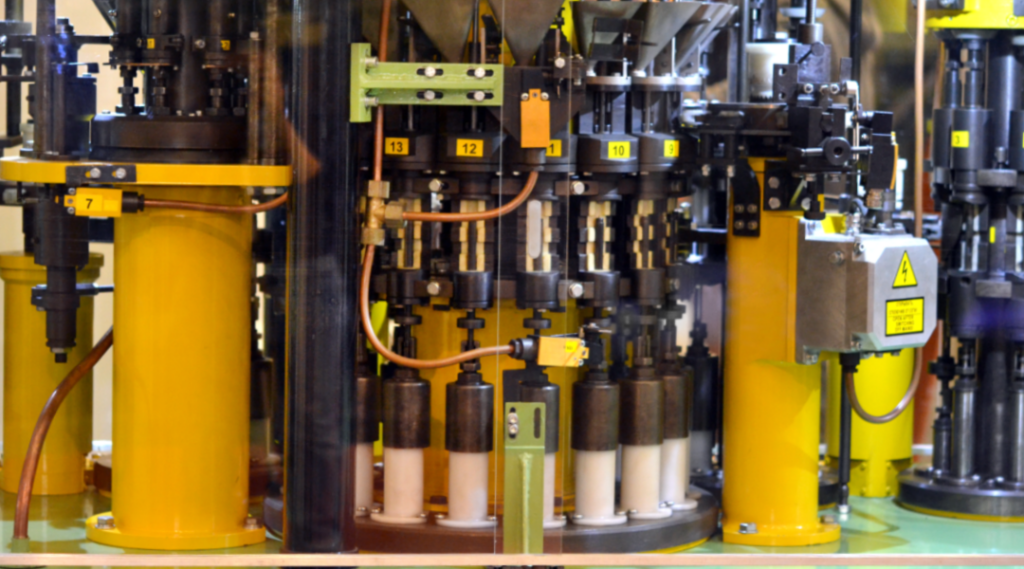
Automated ammunition production machinery relies heavily on specialized industrial lubricants to maintain high-throughput casing drawing, sizing, and assembly in modern defense manufacturing.
Ammunition supplies the volume
Ammunition is one segment of defense manufacturing that is scaling quickly. The EU’s Act in Support of Ammunition Production established an objective of reaching an annual European production capacity of 2 million artillery shells, while Czech manufacturer, STV Group, has outlined an expansion toward 300,000 shells per year.
High unit volumes, multiplied by substantial unit mass, create a large machining and forming requirement, which makes ammunition the industrial equivalent of bulk freight. Projectile bodies require forging, turning, forming, surface treatment, and corrosion protection, making metalworking fluids central to production throughput. Kline’s analysis identifies missiles and munitions as a high-volume segment in which metalworking fluids account for most lubricant consumption.
Ground vehicle investment creates a different demand pattern. Volumes are lower than for ammunition, but lubricant consumption is concentrated in high-value processes, such as hull fabrication, powertrain production, transmission manufacturing, gear machining, and component finishing.
Localization is disseminating these operations across Europe. KNDS Deutschland and Tatra Defence have contracted to produce 150 Leopard 2 A8 hulls in the Czech Republic, with an option for up to 300 additional units. Tatra will be responsible for welding, quality control, and associated technological processes, while the project brings new manufacturing capacity and know-how into the Czech industrial base.
Europe’s defense expansion is reshaping industrial capacity. Automotive plants and production expertise are being redirected toward defense, ammunition capacity is rising rapidly, and ground-vehicle programs are kickstarting new manufacturing activity across the continent. Together, these developments are increasing the amount of machining, forming, fabricating, and finishing taking place within the European industry.
For lubricant marketers, this shift changes both the volume and the technical profile of demand. Defense manufacturing consumes more lubricant than equivalent commercial production, while placing greater demands on fluid performance, process reliability, and compliance. Ammunition provides scale; ground vehicles add lubricant-intensive machining and fabrication processes. Understanding how the industrial machine is being reconfigured is a critical exercise for marketers supplying the fluids with the new production requirements demand.