Despite continuous innovation in high-performance actives, many personal care formulations are becoming more complex, without necessarily delivering stronger differentiation. As brands layer more actives into their products, the challenge is shifting: it is no longer just about what ingredients are used, but how the overall system performs.
This is where multifunctional ingredients in personal care becomes more than a formulation shortcut. It reflects a broader change in ingredient strategy, where actives, functional ingredients, and delivery systems must work together to ensure performance, stability, and scalability.
From Actives to Systems: Rethinking Ingredient Strategy
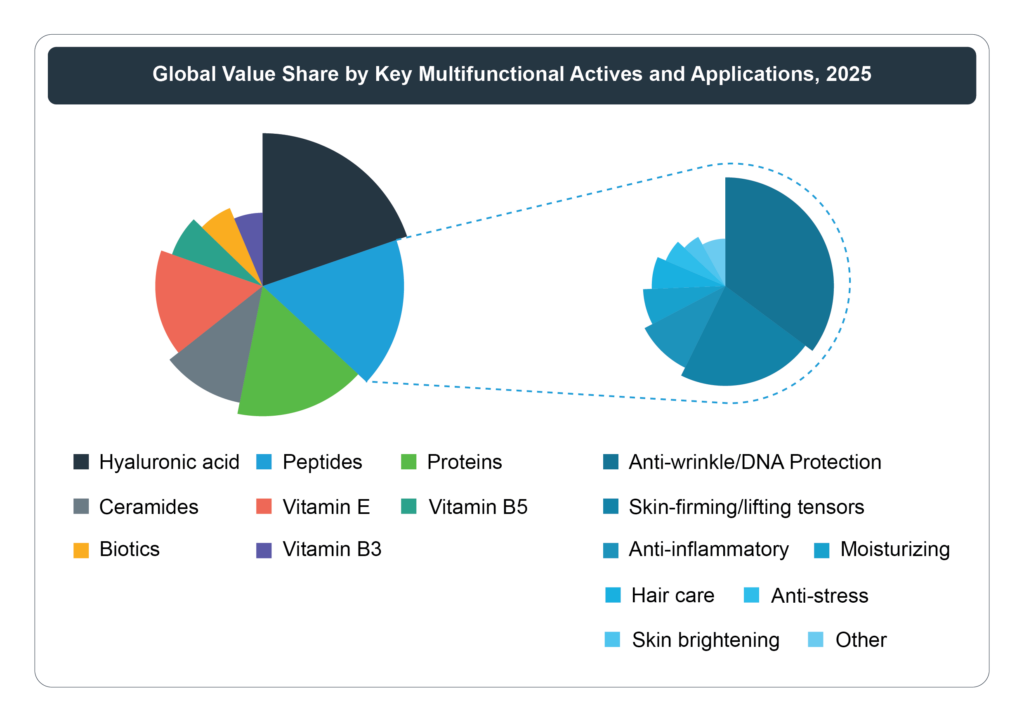
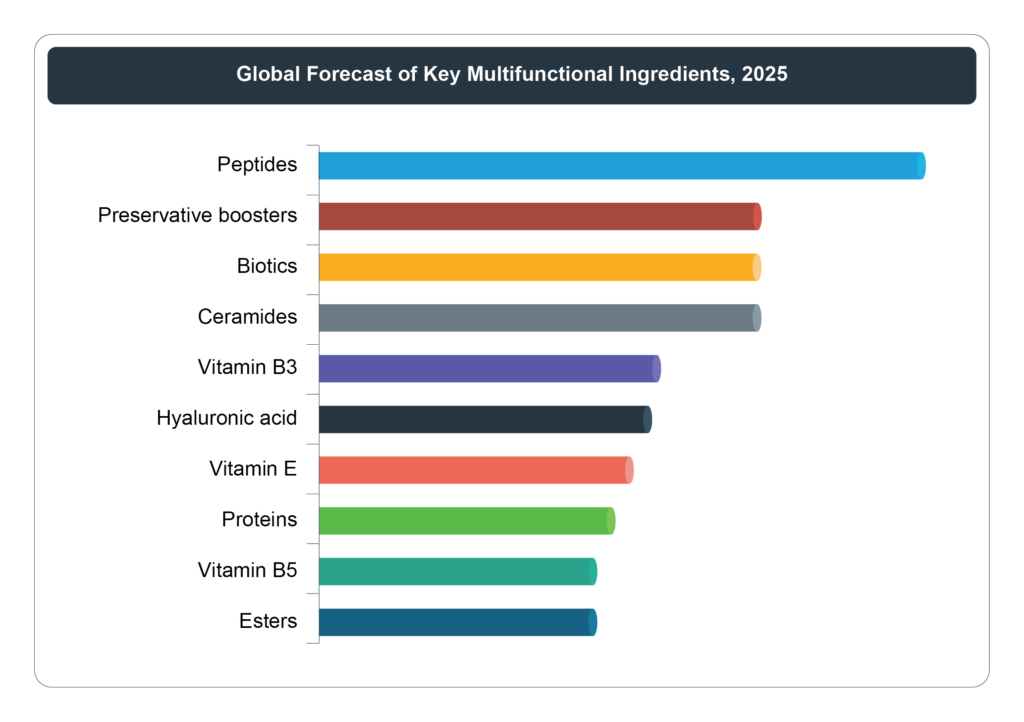
Multifunctional ingredients are defined by their ability to deliver multiple roles within a formulation, combining functional benefits, such as stabilizing or texturizing, with active effects like moisturizing or soothing.
But their importance goes beyond efficiency. In practice, they help address a growing industry challenge:
At the same time, consumer expectations are evolving toward simpler, more transparent, and high-performing products.
For formulators and ingredient suppliers, this creates a clear shift: formulations can no longer be approached as a collection of individual raw materials. Instead, they must be designed as integrated systems that balance performance, complexity, and value.
Why Multifunctionality Matters Now
Several converging forces are accelerating the relevance of multifunctional ingredients:
Multifunctional ingredients help address these challenges by reducing formulation complexity while maintaining performance and sensorial quality.
At the same time, they support formulation resilience, helping reduce reliance on ingredients under regulatory or consumer scrutiny, while still ensuring stability and efficacy.
What This Means for Formulators
The growing adoption of multifunctional ingredients highlights a more fundamental shift in formulation design.
Success is no longer determined only by the presence of high-performance actives, but by the ability of the entire formulation system to:
This requires a more integrated approach, where functional ingredients and delivery strategies play a central role in enabling actives to perform effectively in real-world applications.
So What’s Missing?
In many cases, innovation breaks down when actives are treated in isolation.
Without the right formulation structure, delivery, and functional support, even the most advanced actives may fail to deliver meaningful differentiation at scale.
Watch the Expert Conversation
Why are actives alone not enough, and what does system-level innovation actually look like?
In our latest expert discussion, we explore how formulation strategies are evolving from active-led thinking to integrated systems that combine actives, functional ingredients, and delivery approaches.