

Laura Mahecha
Director, Agrochemicals
Fertilizer Pricing Is Highly Sensitive to Feedstock and Transport Costs
The costs of fertilizer are closely tied to commodities used in its production, such as ammonia and natural gas, which are used as fertilizer feedstock. Unlike oil, there are no strategic reserves for fertilizer, making it highly susceptible to the impacts of supply disruption and causing much cost volatility. Transportation costs are another key component that impacts the price of fertilizer since it is shipped over large distances and is a heavy, bulky product. Major components of fertilizer include urea, ammonia, sulfur, phosphates, and natural gas, and markets in the Middle East are a major source, such as Saudi Arabia.
Strait of Hormuz Closure Tightens an Already Constrained Global Market
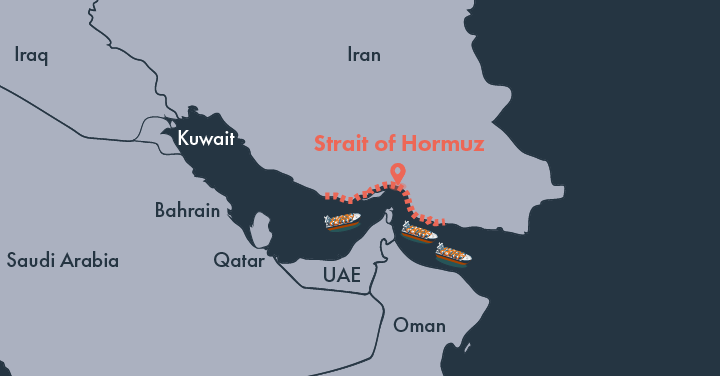
As the conflict between Israel, the United States, and Iran continues, the Strait of Hormuz has been essentially closed to commercial shipping. This shipping passage is estimated to account for about 30% of the world’s fertilizer components, according to the United Nations Food and Agriculture Organization (FAO). This comes as the world’s fertilizer supply has also been significantly constrained by the ongoing conflict between Russia and Ukraine, now in its 4th year. Russia is a major exporter of natural gas, nitrogen, potash, and phosphate, all major nutrients used to make fertilizer. China has also restricted its phosphate exports, leaving the global fertilizer market at risk for wide volatility, and with few alternative sources.
Supply Disruptions Threaten Crop Economics and Food Security
The longer the Strait of Hormuz remains closed, the higher the price of traditional fertilizer will rise. In the northern hemisphere, farmers are in the midst of the spring planting season, so this shipping disruption has the potential to cause significant effects on crop input costs, crop yields, and eventually food prices and/or food insecurity in some markets. While some growers may have already secured their fertilizer for the year 2026 crop, others may have waited for just-in-time delivery. In the latter case, the current situation may have rendered traditional fertilizer input costs prohibitive for growers, depending on which crops they are raising and their associated margins. Ag distributors may try to source fertilizer from other markets; however, fertilizer, as a commodity, is highly susceptible to supply constraints on the global market, such as the price of oil and the Hormuz Lane closure. The United Nations’ FAO estimates that about 3–4 million tonnes per month are restrained during this shipping closure. Countries with increased risk that are highly dependent on this region for their fertilizer supply include Brazil, India, Bangladesh, Thailand, Türkiye, Australia, and the United States. This can cause ripple effects and inflation in the prices of related products such as oilseeds, grains, and animal feed.
Growers Explore Alternatives as Traditional Fertilizer Availability Declines
Alternatives will become necessary and more viable than they had been before. In some cases, growers may turn to on-farm fertilizer production. While not as high quality, on-farm fertilizers can be used to maintain crops and yields when costs become prohibitive, and supplies are restricted. A better alternative is biological products such as biofertilizers, biostimulants, and soil health enhancements. These are likely to see an uptick in demand, especially if the Strait of Hormuz remains closed for a longer period of time, stretching into the later spring and early summer months. These biological crop inputs, which have normally been reserved for higher margin specialty crops such as vineyards, fruit, vegetables, nuts, and ornamentals, may become more widely used to protect row crops over large acreages. Products such as beneficial bacteria, beneficial fungi, minerals, and botanicals such as seaweed extracts may see an uptick in demand this planting season.
Supply Shocks May Accelerate the Transition to Sustainable Inputs
While the current geopolitical crisis and subsequent supply chain bottlenecks are forcing growers to reevaluate their inputs, there is a silver lining for global agricultural sustainability. The accelerated adoption of biological products aligns perfectly with broader regenerative farming goals. Traditional synthetic fertilizers, particularly heavy nitrogen applications used on staple row crops like corn and wheat, are known for their high carbon footprint and risk of waterway runoff. By shifting toward biofertilizers and biostimulants out of sheer necessity, growers are inadvertently accelerating a transition toward improved soil microbiomes and more resilient, sustainable crop management.
Biological Suppliers Face Rapid Growth Amid Production Constraints
If so, the world’s leading biological ag suppliers such as Nutrien, Corteva Agriscience, Syngenta, SAN Agrow, UPL, and FMC will see growth but may also be challenged to meet suddenly increased demand as these living strains are challenging to mass produce. Kline estimates that the current size of biostimulants, biofertilizers, inoculants, and soil conditioners in major agricultural markets is valued close to USD $3.0 billion and is poised for strong gains amidst the turmoil in traditional fertilizer prices. According to Kline’s Biostimulants and Biofertilizers: Global Market Overview and Opportunities study, this market is rapidly transitioning from a niche sector, historically reserved for organic farming and high-value specialty crops, into mainstream conventional crop protection programs.
Regulation and Innovation Continue to Sustain Market Momentum
The study highlights that sustainability mandates, stricter environmental regulations (particularly in the EU), and climate-induced abiotic stress are aggressively fueling this expansion. Product innovations centered around seaweed extracts, humic and fulvic acids, and microbial mixtures are leading to the charge in optimizing crop yields and nutrient efficiency. While the industry still faces hurdles regarding regulatory harmonization and the complexities of mass-producing biologicals with consistent shelf lives, the outlook remains incredibly strong. Kline estimates that the global biostimulants and biofertilizers market is already valued in the multi-billions and is poised for double-digit compound annual growth, significantly accelerated by the current turmoil in traditional synthetic fertilizer prices.
For more information on the impacts to global chemical and material supply chains read our blog post:
Structural Strength in a Volatile Region: GCC Chemicals Trade Flows, Chokepoints, and Market Scenarios
Recent geopolitical developments in the Middle East have renewed attention...
Read More