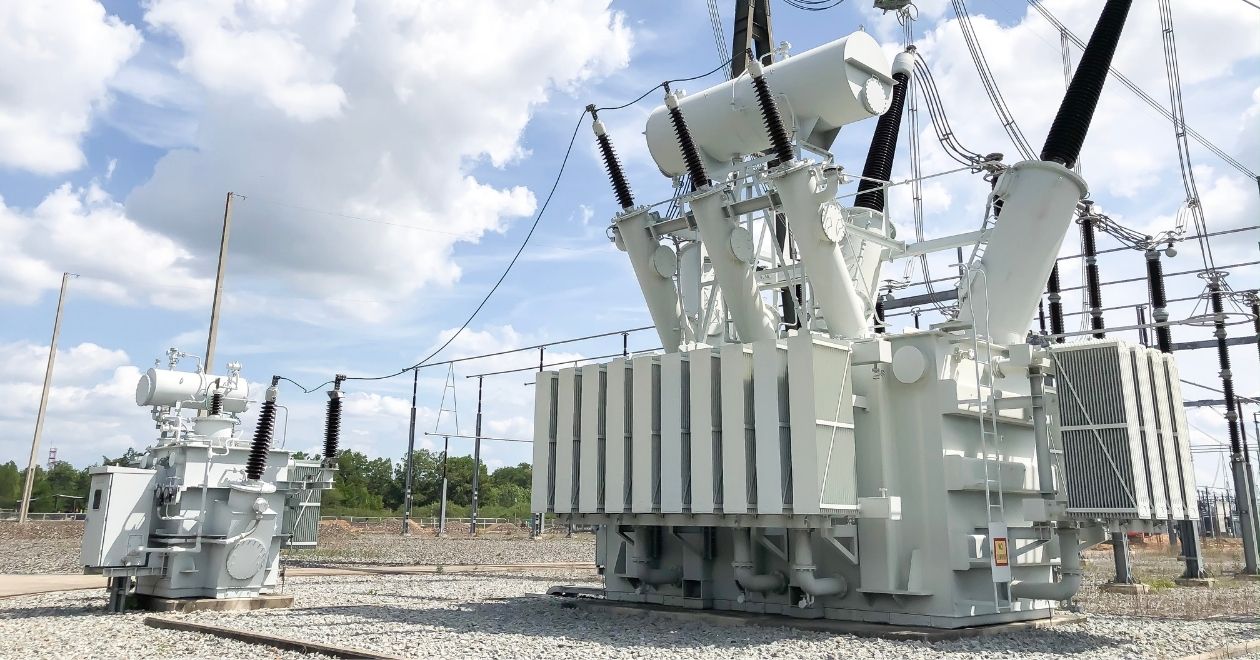
Electric power is the backbone of any modern economy, and over the next 5 to 10 years, sustained investments are expected to be seen in grid capacity, grid resilience, and rising electricity demand. For most stakeholders, transformers are the most visible part of this whole transition. However, the transformer oil market, though less visible, is equally critical since they play a key role in insulation, cooling, and the long-term reliability of oil-filled transformers.
For transformer oil suppliers and base oil marketers, this market is attractive, not only because demand remains steady but also because new growth pockets and technology shifts are now emerging in regions that were earlier considered mature or even saturated.
The Global Power Scenario: Growth, Electrification, and Grid Modernization
Presently, global electricity demand is being pushed by several structural drivers. These include electrification of transport and heating, industrial expansion in emerging markets, and the continued integration of renewable energy into the system. On the supply side as well, renewable capacity additions and new interconnections are making the grid more complex, which in turn leads to higher investment into transmission, distribution, and substation infrastructure.
One useful way to look at this is through what credible energy agencies are saying about grid investment. The International Energy Agency (IEA) has pointed out that investment in electricity grids needs to increase considerably, compared to historical rates, to achieve net-zero targets. Even in a slow-progress scenario, investment in electricity infrastructure will accelerate. The growing investment in electricity is crucial because every major grid expansion or refurbishment cycle eventually leads to transformer procurement, and transformer procurement directly translates into demand for transformer fluids.
For transformer oils, this results in a demand pattern that is generally more stable than that in many other petroleum-derived product markets. Even when economic cycles slow down, utilities continue to prioritize reliability, routine maintenance, and failure prevention, since transformer failures are costly, highly disruptive, and highly visible to regulators and the public.
Transformer Demand and the Link to Transformer Oil Consumption
Transformer oil demand comes from two broad buckets:
New-fill demand: Oil used in newly manufactured and newly installed transformers (including replacements that are effectively new units)
Installed-base demand: Oil used for top-ups, reclamation, service fills, and periodic replacement, depending on operating practices and condition monitoring outcomes
The global transformer market is widely expected to grow steadily over the mid-term, supported by grid modernization and load growth. Grid modernization, expansion, and diversification are at the core of almost all economies across the world, regardless of their electricity penetration. Due to a huge portion of the grid being outdated, mature markets is primarily focusing on grid modernization, which encompasses grid expansion and connectivity. New growth avenues are opening as the market dynamics change; therefore, the demand for transformer oil is expected to remain steady across the markets. Often, demand surpasses supply, creating a stronger interest among the industry participants, leading to strong and steady demand for transformers and hence transformer oils.
Data Centers: Re-Energizing Mature Markets
A key development, and one that is highly relevant for transformer oil marketers, is the rise of data centers as a major driver of incremental electricity demand. This is especially notable because it changes the demand narrative in regions previously assumed to be “replacement-only” markets.
The IEA projects that global electricity consumption for data centers could roughly double to around 945 TWh by 2030 in its base case, growing far faster than the overall electricity demand. This is not a small number; it means utilities and regulators in North America, Europe, and parts of Asia are now planning new substations, grid reinforcements, and transformer capacity additions to support concentrated data center clusters.
For transformer oils, the data center factor matters in three ways:
Higher transformer density and faster project cycles in select regions
Reliability expectations that favor proven suppliers and robust formulations
Thermal and loading profiles that can push performance requirements, especially for oxidation stability and long-term dielectric integrity
Therefore, data centers are a demand type that can accelerate transformer procurement and potentially increase the value placed on higher-performance fluids.
What Makes the Transformer Oil Market Distinct
Transformer oils sit in a specification- and trust-driven market. A few salient features stand out:
Performance and standards matter more than branding. Transformer oils must meet electrical and chemical performance requirements (dielectric strength, dissipation factor, oxidation stability, moisture behavior, corrosive sulfur control, low-temperature flow, and more). In many tenders, compliance with standards and proven field performance are decisive factors.
The sales cycle is long, but relationships are long-lasting. Utilities and transformer OEMs value continuity, technical support, and consistency of supply. Once qualified, a supplier can benefit from repeat business, but qualification can take time and requires strong documentation and discipline.
The quality of base oil is central. For base oil marketers, transformer oil is an important downstream outlet where color, stability, and impurity control influence finished fluid performance. This makes feedstock selection and refining capability relevant.
An installed base creates steady underlying demand. Even in low-growth geographies, maintenance practices, service filling, and replacement cycles support stable consumption.
Sustainability and Technology Disruption: Real but Selective
Sustainability is increasingly shaping procurement; however, its trajectory is not unidirectional. Mineral oil will remain dominant in many applications as it is economical, widely available, and well-researched. Simultaneously, ester-based fluids (natural esters and synthetic esters) are gaining adoption in specific use cases, mainly because they offer higher fire points and improved biodegradability, which can be attractive in dense urban areas, environmentally sensitive locations, and certain renewable installations.
For the market as a whole, the next decade is likely to show a “mix shift” rather than an abrupt replacement of mineral oils. The opportunity for suppliers is to identify where ester adoption is accelerating and where mineral oils remain at the default but require higher performance, such as improved oxidation stability for harsher duty cycles.
Sustainability and Technology Disruption: Real but Selective
Sustainability is increasingly shaping procurement; however, its trajectory is not unidirectional. Mineral oil will remain dominant in many applications as it is economical, widely available, and well-researched. Simultaneously, ester-based fluids (natural esters and synthetic esters) are gaining adoption in specific use cases, mainly because they offer higher fire points and improved biodegradability, which can be attractive in dense urban areas, environmentally sensitive locations, and certain renewable installations.
For the market as a whole, the next decade is likely to show a “mix shift” rather than an abrupt replacement of mineral oils. The opportunity for suppliers is to identify where ester adoption is accelerating and where mineral oils remain at the default but require higher performance, such as improved oxidation stability for harsher duty cycles.
Navigating the Shift: Challenges & Opportunities to Watch
The transformer oil market is moving away from the “set it and forget it” category. As the grid modernizes, the hurdles for suppliers are becoming more complex. From high-load data centers pushing thermal limits to supply volatility in key base oil groups, the stable baseline of the past decade is fracturing.
We have identified the primary pressures currently facing the industry:
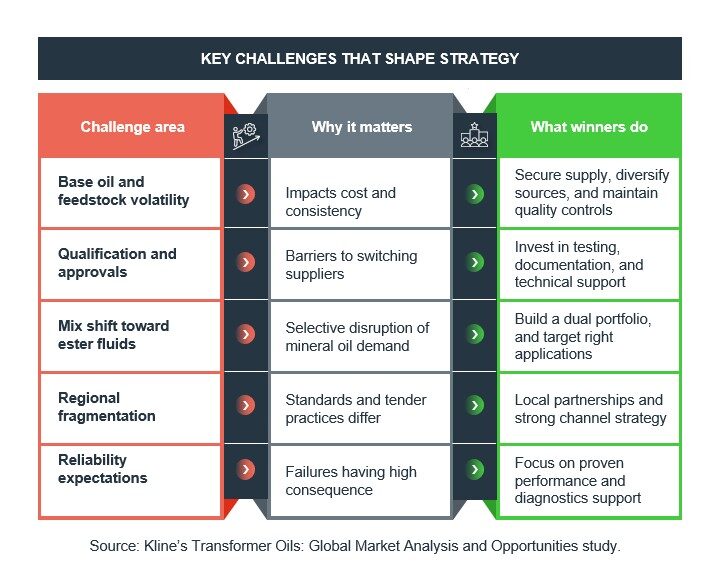
While these challenges define the current tension, they also point directly toward the next wave of growth. But where exactly do the “Growth Pockets” sit in 2026?
We have mapped these challenges against the most lucrative market openings in our latest strategic visual.
Get the complete high-res map to see growth pockets across first-fill, service-fill, and regional grid expansion.
Growth Trajectory: What to Expect Over 5 to 10 Years
A practical way to think about transformer oil demand over the next decade is a combination of steady global growth and pockets of faster growth.
Steady baseline growth comes from grid expansion, transformer replacements, and the growing installed base.
Above-average growth pockets are likely forming where electricity demand is accelerating, grid infrastructure is being built out, and transformer density is rising. This includes parts of Asia, the Middle East, Africa, and also selected mature markets experiencing data center-driven load growth.
Value growth can outpace volume growth if premium fluids, higher-performance formulations, and ester penetration increase the average realization per liter.
However, suppliers should remain realistic. The market will continue to be cost-sensitive, tender-driven, and conservative in switching behavior. That is why technical credibility and supply reliability matter as much as pricing.
Why This Market Is Worth a Closer Study
The transformer oil market extends beyond mere supply of oil to utilities; it requires a comprehensive understanding on how grid investment, electrification, digital infrastructure, equipment standards, and sustainability pressures combine to shape a specialized fluid market with long asset lifetimes and high consequences of failure.
In a period when grids need substantial capital infusion, and data centers are reshaping electricity demand assumptions, transformer oils become a strategically significant category. For transformer oil suppliers and base oil marketers, the next 5 to 10 years will reward those who track where capacity is being added, where performance requirements are tightening, and where sustainability is becoming a procurement differentiator, without losing sight of cost and practicality.
This is precisely what makes a structured, global study of the transformer oil market timely. Such an analysis helps separate the steady baseline from the true growth pockets, and it clarifies how technological disruptions may play across various regions and applications. All these issues will be addressed in detail in Kline + Company’s upcoming market study focusing on the transformer oil market.