Clean-label demand is reshaping food preservation, but the path forward is not as simple as replacing synthetic preservatives with natural alternatives.
For many food and beverage manufacturers, the bigger challenge is balancing shelf life, food safety, formulation performance, cost, and label expectations at the same time. A preservative approach that works in one application may not deliver the same result in another, especially when processing conditions, distribution models, pH, water activity, and consumer expectations vary by category.
That is why food preservation strategies are becoming increasingly application specific.
The shift is not simply synthetic to natural
Natural and alternative preservation systems are gaining momentum, supported by consumer interest in clean labels, ingredient transparency, and reduced artificial additives. But the transition is selective.
Synthetic preservatives still account for the bulk of global volume demand today, showing that established systems continue to play an important role where performance, cost, safety, and technical reliability are critical.
For suppliers and manufacturers, the question is no longer simply whether natural preservatives are growing. It is where they are commercially viable, where hybrid systems are emerging, and where established preservatives remain difficult to replace.
Different categories face different trade-offs
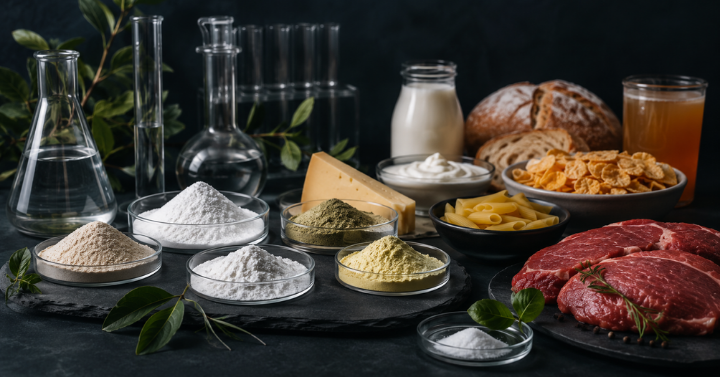
In bakery, clean-label substitution is accelerating, particularly as consumers look for fresher, more artisanal, and minimally processed products. This is creating interest in fermentates and multi-hurdle systems, while established ingredients such as propionates continue to play an important role in mold inhibition.
In meat and meat products, preservation strategies must balance food safety, nutrition perception, label transparency, and regulatory scrutiny. Nitrates and nitrites remain important but tightening restrictions are increasing interest in multi-hurdle approaches, lactates, acetates, fermentation-derived systems, and clean-label curing solutions.
In beverages, the challenge is increasingly formulation-led and process-led. Low-sugar, RTD, and functional formats can be harder to stabilize, meaning preservation often depends on the wider system of formulation design, processing, and packaging rather than standalone preservative ingredients alone.
In dairy and dairy analogues, fermentation and culture-based systems are already central to preservation. As demand grows for extended shelf-life and plant-based dairy formats, manufacturers need solutions that support safety and stability without compromising clean-label positioning.
Why this matters
For ingredient suppliers, formulators, and food manufacturers, broad market trends only tell part of the story. The real value lies in understanding how preservation needs differ by application and product types.
The companies best positioned for growth will be those that can identify where clean-label substitution is realistic, where hybrid strategies are needed, and where established preservative systems will continue to hold their ground.
Kline’s Global Food Preservative Market Outlook provides a detailed view of these shifts, helping companies evaluate preservative ingredient demand across, applications and regions.
Connect with our team to discuss how the findings apply to your business priorities.