
Laura Mahecha
Director, Agrochemicals
When most people hear “Google” and “Debug,” they might assume a connection to software development. However, Google’s Debug initiative is focused on a very different challenge: reducing mosquito populations and the risk of disease transmission.
Mosquitoes are widely recognized as one of the deadliest threats to human health globally due to their role in spreading diseases such as dengue, Zika, yellow fever, and West Nile virus.
How Google’s Debug Initiative Applies SIT
Debug’s approach is based on the Sterile Insect Technique (SIT), a method first introduced in the 1950s.
The concept is simple:
Male insects are sterilized and released into the wild
When they mate with females, the resulting eggs do not hatch
Over time, this reduces the overall insect population
SIT has previously been used successfully in pest control programs targeting insects such as fruit flies, codling moths, and screwworms. (see our analysis of New World screwworm and its implications for U.S. pest control demand).
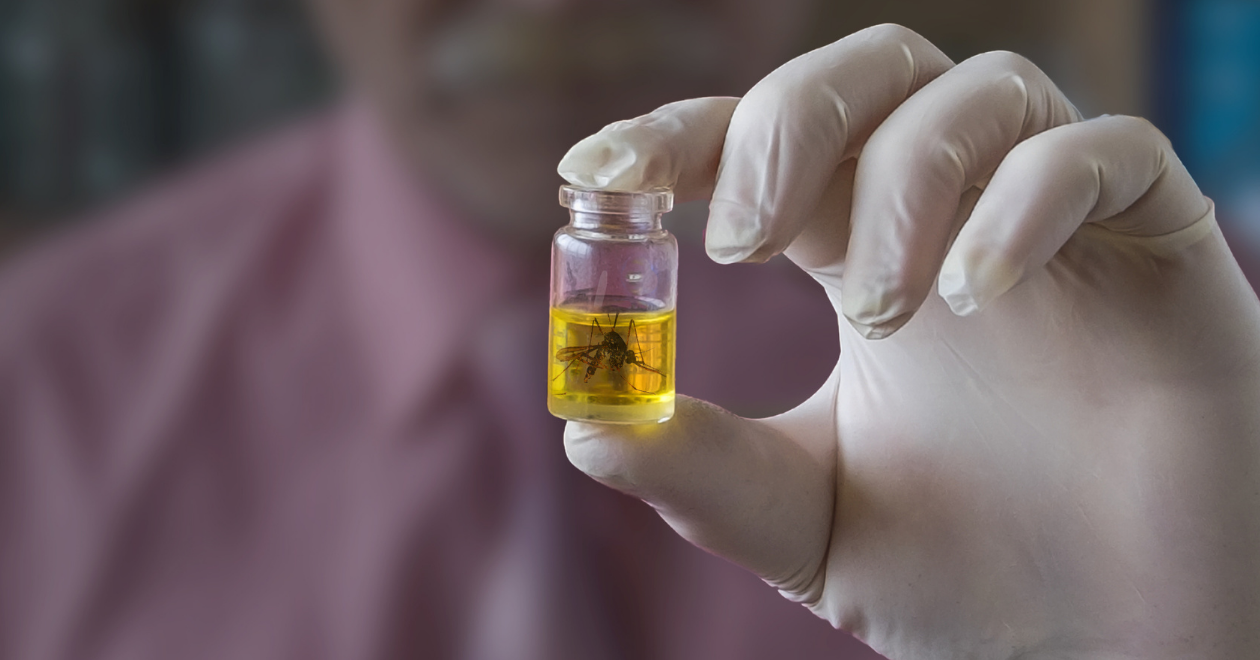
In its latest initiative, Debug plans to release up to 32 million sterile male mosquitoes in California and Florida. These mosquitoes are treated with a strain of Wolbachia pipientis bacteria, which renders them sterile and prevents reproduction when they mate with wild females.
Technology’s Role in Modern Mosquito Control
Beyond applying SIT, Debug is incorporating a range of technologies to address historical challenges associated with mosquito control at scale.
These include:
Automated systems for rearing large numbers of mosquitoes
Technologies to accurately sort male and female insects
Sensors, traps, and software to monitor mosquito populations and program effectiveness
Historically, SIT has not been widely effective at reducing mosquito populations at the scale required to stop disease transmission.
The integration of advanced technologies is intended to improve scalability and operational efficiency.
Our research indicates that mosquito control programs are increasingly integrating monitoring, surveillance, and digital tools such as GIS mapping, drones, and predictive modeling to improve precision and effectiveness. These technologies support more targeted application and program management, rather than replacing existing control methods.
Integrated Approaches to Mosquito Management
Mosquito control programs increasingly rely on combined approaches (as highlighted in our analysis of mosquito control trends and integrated management approaches).
These include:
Chemical methods, such as insecticides and larvicides
Biological methods, including the use of natural agents and bacteria-based control
Mechanical methods, such as eliminating breeding sites
These approaches are often used together, supported by monitoring and environmental assessment, to maximize effectiveness.
Our findings show that mosquito control is not dominated by a single approach. Instead, programs use a combination of chemical, biological, and growth-regulating (IGR) solutions, with usage varying by region and operating conditions. This reflects a flexible, adaptive approach to mosquito management.
Emerging and Alternative Control Methods
In addition to traditional methods, mosquito control programs are also exploring alternative approaches.
Examples include:
Sterile Insect Technique (SIT)
Biological control agents such as fish
Source reduction strategies
Ecological and habitat-based interventions
According to our data, SIT is already in use by a portion of mosquito abatement districts, although adoption remains relatively limited compared to established methods.
The report identifies increasing interest in biological, ecological, and alternative control methods, driven by factors such as resistance, environmental considerations, and regulatory requirements. These methods are typically used alongside chemical solutions rather than as direct replacements.
Market Trends Shaping Mosquito Control
Demand for mosquito control solutions continues to be shaped by several factors, including:
Resistance to commonly used chemical active ingredients, leading to product rotation and diversification of control methods
Environmental and regulatory considerations, which influence the selection of control approaches
Public awareness and community expectations, which support the use of targeted and environmentally compatible solutions
Kline’s research shows that chemical products remain a key part of mosquito control programs, but their use is increasingly influenced by resistance management, site-specific conditions, and integration with other control methods.