
Laura Mahecha
Director, Agrochemicals
Mosquito abatement districts (MADs) across the United States have recently completed our survey about their product and equipment usage, disease concerns, and resistance to vector control pesticides. The results were published in Kline’s Mosquito Control U.S. study in December.
A common theme is a shift toward greater larvicide usage and larval surveillance among MADs. Larvicides are preferred because they target mosquitoes at the larval stage, preventing adult populations from emerging and reducing the need for repeated adulticide applications. This proactive approach lowers chemical costs, minimizes labor, and aligns with integrated pest management strategies.
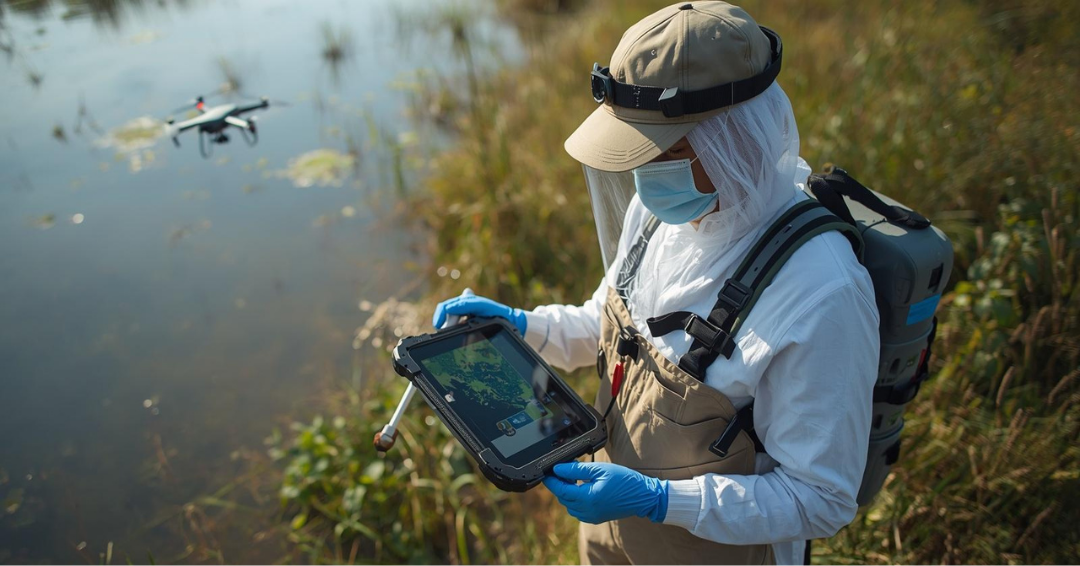
Larvicides are also considered more environmentally safe, particularly biological and insect growth regulator (IGR) formulations, which have minimal impact on non-target species. Advances in technology, such as drone-based applications and GIS mapping, have further improved precision and efficiency in larvicide use.
According to the latest estimates from Kline & Company and the American Mosquito Control Association (AMCA), there are approximately 400 to 500 MADs or Vector Control Districts (VCDs) of significant size operating in the United States. In addition, 1,000 to 2,000 smaller health departments and municipal agencies continue to perform mosquito control treatments.
Collectively, these organizations are responsible for protecting an estimated 600 million acres. These districts often cover entire towns, cities, and, in many cases, counties. However, a substantial portion of this area receives no treatment due to factors such as the absence of mosquito breeding sites, unfavorable climatic conditions, or low human population density.
As a result, the area realistically available for chemical mosquito control activities is estimated at 150 million acres, representing roughly 25% of the total protected area. The Southern region, particularly Florida, Louisiana, Georgia, Texas, and other humid Southeastern and Gulf Coast states, continues to lead the nation in insecticide consumption for mosquito abatement .
Recent heightened awareness of mosquito-borne diseases such as the Zika virus and West Nile Virus (WNV) on the part of the public has put pressure on mosquito professionals to do everything possible to control mosquito vectors in their districts. When asked to identify the top five mosquito-borne diseases of concern in their districts, respondents most frequently mentioned West Nile Virus (WNV), Eastern equine encephalitis (EEE), Dengue, and Western equine encephalitis (WEE). Planned product rotation helps control vectors and reduce resistance among mosquito populations.
District managers anticipate upcoming changes that include increased mosquito surveillance activities, increases or changes in larvicidal treatments, and upgrades to their technological capabilities, largely spurred on by the new awareness among their constituents of the dangers that mosquitoes may pose. In general, the demand for improved mosquito control is greater, especially in geographic areas where Aedes aegypti and Aedes albopictus are found.
Due to increased surveillance and strong concerns about environmental and personal safety, it is also expected that there will be stronger growth in the use of targeted larvicide treatments, as many professionals will plan and attempt to combat mosquito populations early in the season.
Kline’s Mosquito Control U.S. report, published in December 2025, provides details on usage, resistance, and methods of control in 2025, along with brand-level sales data on the public health vector control market in the U.S. and how this market is expected to perform in the future through 2030. For more details about the MAD survey, our data, and the report, please contact us.